

5 fun ways to reduce stress
May 5, 2026

I can be way too serious—and I know I’m not the only one—which is why I thought we should lean into fun today. Research-backed fun, even.
As I wrote in my book Radiant, “That which brings you the most joy is what will bring you the most!” That got me thinking about doing more things that we enjoy.
I think it’s safe to assume we all know stress is bad for our health, our longevity, our relationships and our joy. It even impedes your ability to make good decisions, as I described in this article.
So today I want to focus on fun ways to lower our stress.
1. Reading
Reading is one of my personal favorites and one that’s very easy to implement any time, anywhere. There are all sorts of benefits to reading but this statistic took me by surprise.
After six minutes of reading in silence, stress levels were reduced by 68%, according to cognitive neuropsychologist Dr David Lewis.
And as if reading wasn’t its own reward, a 12-year study by Yale showed:
“Book readers experienced a 20% reduction in risk of mortality over the 12 years of follow up compared to non-book readers.”
Reading this from the Yale study confirmed what I’ve always felt: “Books are more advantageous for survival than newspapers/magazines.” Something to keep in mind for people who claim they have no time to read books, unless they’re on vacation.
What’s interesting is that books are protective regardless of gender, wealth, education, or health. So you have no excuse there 😉
If you’re looking for a book to read, you might enjoy the YA Fantasy novel I wrote. You can get the first 23 chapters of Poisoned Arrow for free here.
I know some people don’t like to read (though I’ve never fully understood why) so if that’s you, you might enjoy tip 2 more. 😉
2. Sitting by a body of water
You might instinctively know that being around a (natural) body of water has a calming effect. Marine biologist Wallace J Nichols has studied the impact of water on our brain and Blue Mind and the subtitle says it all: The surprising science that shows how being near, in, on, or under water can make you happier, healthier, more connected, and better at what you do.
I mean, what’s not to like? His book shows that water decreases stress and anxiety. The great thing is that the calming effect of water even works when you look at a picture. So no worries if you don’t have a natural body of water near you. You can make do with the pool, a fish bowl (apparently) or even a painting.
But for this blog we can do better than that. I recorded this recently on my favorite stretch of the Dutch coast. Enjoy!
3. Laughter
I think there are no surprises here. Spontaneous laughter reduces cortisol, whether it was through laughter therapy or watching a comedy movie.
What’s even more fun—pun intended—is that anticipation of laughter even reduces cortisol (39%) and adrenaline (70%). Those are significant numbers. And this ripples through in our entire health, from improved functioning of our immune system to alleviation of depression.
What are you watching tonight? 😉
4. Awe
Seeing or experiencing things that make you feel awe like seeing a sunset, watching the Olympics, holding a newborn or hearing a beautiful piece of music reduces daily stress and everyday concerns. Which makes sense because you’re immersed in feeling wonder for something.
Thinking of awe reminds me of what I read in Mark Schaefer’s book Audacious about collective effervescence.
“A state of awe called collective effervescence, a powerful emotional contagion that occurs when you bring people together in a joyful way.”
So experiencing awe together by visiting a museum, going to a concert or watching the view from the top of a mountain gives you extra points.
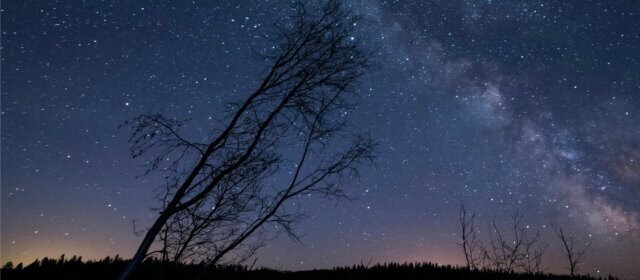
When I visited Uluru in the middle of Australia, seeing the stars at night was a magical moment of awe. Since there’s no light pollution you can see the milky way with your naked eye. No telescope needed. That blew my mind.
Seeing all those stars—and hearing the astronomer guide us around the night sky while sitting on the ground—was a moment of collective effervescence I’ll never forget.
5. Hugging and gentle touch
Another moment I’ll remember was on my father’s 80th birthday recently. We somehow got to talk about the importance of touch and skin-on-skin contact and I mentioned the importance of eight hugs per day.
As family therapist Virginia Satir once said, “We need 4 hugs a day for survival. We need 8 hugs a day for maintenance. We need 12 hugs a day for growth.”
Now when you live by yourself that might be a tall order. And I confessed that most days I’m not receiving 8 hugs. To which my uncle got up and pulled me into a hug. ❤️ (I’m so grateful for my family on both sides, and I know that’s not a given).
Hugging and gentle touch lowers heart rate and stress, improves sleep and even reduces our reactivity to (future) stress.
Of course, things like meditation, deep breathing, and heart coherence are known to reduce stress as well. But I thought for this post, let’s focus on things you would do just for the enjoyment of the activity itself. And that the fact they reduce stress is an extra bonus or a fun way to lower your stress on purpose.
Now if only we could read a funny book, sitting by a lake under a starlit night, holding hands. 😉

Iris van Ooyen guides people home to themselves. As a Dutch life transformation mentor with 24 years of experience, she offers hope with a compass—helping you find your way back to who you truly are when life, success, or circumstance have made you lose touch with yourself. She’s the author of Radiant: How to Have All the Energy You Need to Live a Life You Love and the novel Poisoned Arrow. When you feel life should be more than this, contact Iris to come home to yourself—and love your life again.
Related posts
-

Are you afraid of the answer?
There’s probably at least one question that you don’t want to hear the answer to or you wouldn 
-

The signs your body is begging you to slow down (and why you keep ignoring them)
If you’re deliriously happy in all aspects of life: work, relationships, health, you name it—you…
-
Why burnout is not for losers
Most people, my previous self included, have the impression that burnout is something for people who…