
My boyfriend’s comment changed how I show up
December 2, 2025
I’ve struggled being fully myself for years. As a highly sensitive and intuitive person, I’ve often felt the need to pretend I was ‘normal’. For years I thought that in order to be accepted and liked I had to be some toned-down version of myself.
Being entirely yourself can be scary. We’re often worried what other people might think. But what if in order to truly belong you need to be more of yourself—not less?
I recently heard Stephen Bartlett interviewing Brené Brown. He said that the quest for true belonging and the courage to stand alone (referencing her book) appears to be a contradiction. “Why is it important to stand alone?”
Brené’s answer:
“Because I don’t think you can truly belong to anything or any group if you don’t belong to yourself first. True belonging requires us to be who we are. Not to change who we are. That’s fitting in. And fitting in is the greatest threat to belonging.”
I love how she said that. And it drives home the danger of not being ourselves. Because even though we think we’re fitting in by being a more desirable version of ourself—we’re not really accepted. People simply seem to like to the mask you’re showing them.
Our need to fit in
Let’s start by normalizing our need to fit in. As children we’re looking for the approval of our parents. And in addition, part of our upbringing is geared towards fitting in because standing out is often dangerous. And our parents obviously want us to be safe.
As adolescents we feel the need to be accepted by our peers—since that is our safeguard for the future. Our peers are the ones we rely on to protect our back or stand guard at the fire when we sleep.
For many fitting in is a survival strategy that goes beyond this ancient need of being accepted by the group and finding protection in community. If you grew up in a physically or emotionally unsafe environment, your ability to blend in might’ve been essential.
So it makes sense that we want to fit in. But it’s not a healthy habit moving forward and we need to learn how to consciously change that.
The cost of fitting in
Here’s what fitting in is actually costing you.
No true connection
The most obvious cost is that you rob people of the opportunity to know the real you. They never see your brilliance—only an ‘appropriate’ or watered-down version. You miss out on fully connecting with them.
My boyfriend at the time once said “I wish my friends could see you the way I see you at home.”
Ouch.
I didn’t even realize that I presented a more formal, less enthusiastic version of myself outside the house. That I was behaving in a way I assumed was expected or required. But I had somehow concluded it was not okay or desirable to show up as my true self. This habit was so unconscious and automatic that I needed my boyfriend to point it out to me.
Lost potential
When you’re not fully yourself the things you do will not be fully aligned. You won’t be able to live your brilliance and bring the world what you have to offer. By trying to blend in we all miss out on your unique abilities. But more importantly—you won’t live up to your full potential. You’ll never get to shine like you were meant to.
Physical and emotional stress
I also believe fitting in puts a strain on you physically and emotionally. You’re constantly hiding or holding part of yourself back. That’s a contraction rather than an expansion. It puts tension or stress on your system when things can’t flow freely.
A half-lived life
A life where you blend in might be a seemingly safe life, but I think it won’t be your best life. Perhaps we would be less tempted to think the grass is greener somewhere else when we’re so fully immersed in our own life that we would never want anything else.
I think that stress of telling yourself that who you are is not wanted or good enough will impede your health in the long run.
Why the world needs the true you
We’re doing our best to fit in while all the world needs from us is to be ourselves, to stand out, to show and share our brilliance and unique abilities.
Which reminds me of this beautiful quote from Martha Graham
“There is a vitality, a life force, an energy, a quickening that is translated through you into action, and because there is only one of you in all of time, this expression is unique. And if you block it, it will never exist through any other medium and it will be lost. The world will not have it. It is not your business to determine how good it is nor how valuable nor how it compares with other expressions. It is your business to keep it yours clearly and directly, to keep the channel open.”
So next time you feel like you’re being too much or not enough, maybe think back of these words. We want what you uniquely have to offer!
What becomes possible when you come home to yourself
Just take a moment to imagine what it would feel like to let go of the reins, to stop holding on so tight and be able to relax. Being able to release tension you didn’t even realize you were holding. To wake up excited because of who you are, eager to contribute, to enjoy life. To be fully present and connect from the heart with others. To explore what’s possible when you take your foot off the brake and really allow life to take you where you are meant to go.
That’s exactly why I’ve created Come Home to Yourself.
How to stop fitting in
In order to stop fitting in, you first need to cultivate a sense of inner safety and acceptance. You need to feel and believe that it’s more desirable to be who you truly are rather than who you are pretending to be.
That’s not an easy feat, especially if that stems from a lot of experience of feeling unsafe or rejected or out of place.
What makes this inner work so challenging is that it’s often more than just fear holding us back. Perfectionism whispers that we need to have it all figured out before we can show up authentically. Imposter syndrome convinces us that our real self isn’t (yet) good enough. And cultural conditioning teaches us that certain aspects of who we are aren’t acceptable or valuable.
These barriers are normal, but they’re also exactly what keeps us trapped in inauthentic patterns.
I think you’ll be happier and healthier when you’re able to be fully yourself in how you show up for people. The closer that is to who you are deep down, the easier it will be to move through this world and the more powerful it will be. Because people can tell if there’s a mismatch.
Questions to start with
Here are three questions that will show you exactly where you’ve been fitting in instead of being yourself.
Carve out 10 minutes to free write the answers that come up—by hand if possible.
- Where or when do you feel like you’re being fully yourself?
- What is an example of a place where you know you are not entirely yourself—because for whatever reason you feel the need to fit in or show a different version of yourself?
- What part of yourself do you tone down or hide to be accepted?
If you recognized yourself in any of these answers—if you saw places where you’ve been hiding or performing—that’s actually good news. Because awareness is the first step home to your true self.
Don’t judge yourself. Simply gather information to get clear on where you are (not) fully yourself. That third question might take a little longer to answer, so don’t worry if the answer isn’t obvious.
If these questions revealed places where you’ve been fitting in instead of being yourself—or if you’re simply ready to remember who you are—Come Home to Yourself will guide you there.
This 6-week journey reconnects you with your body, your energy, your truth, your intuition, your desires, and your power—with personal support from me every step of the way.
Limited to 6 participants. Read more or get your seat here.
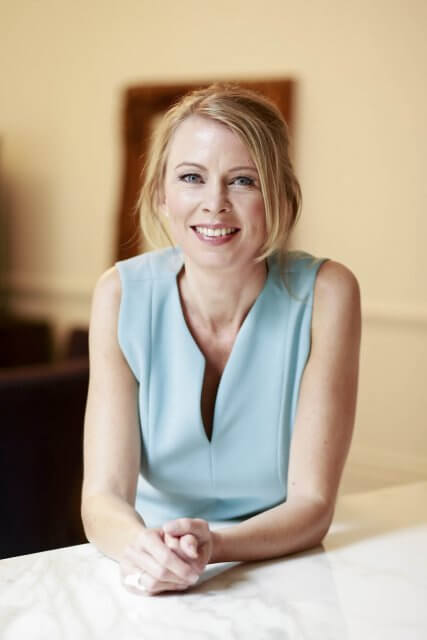 Iris van Ooyen guides people home to themselves. As a life transformation mentor with 20+ years of experience, she offers hope with a compass—helping you find your way back to who you truly are when life’s demands have made you lose touch with yourself. She’s the author of Radiant: How to Have All the Energy You Need to Live a Life You Love. Contact Iris to come home to yourself—and love your life again.
Related posts
-
This is how I lost myself
How do you lose yourself? Not all at once. Not in one dramatic moment. You lose yourself one d…
-

3 questions that helped me make sense of a difficult year
As 2025 ends, three questions are helping me reflect and process everything that happened—the chal…
-
What I did with a surprise day off
What would you do if you suddenly had a day off? Recently I had a full day meeting planned with p…